

On Nov 5, 2025, the Patents Court handed down an important interim injunction decision in Dr Reddy’s Laboratories (UK) Ltd v Boehringer Ingelheim International GmbH, neutral citation EWHC 2834 (Pat). Michael Tappin KC, sitting as a Deputy Judge, granted interim relief restraining Dr Reddy’s from dealing in empagliflozin (the active in Jardiance) in the UK pending a form‑of‑order hearing after judgment on the injunction application. The case sits at the intersection of patent/SPC rights, “skinny label” marketing authorisations, and a fast-moving SGLT2 inhibitor market following the collapse of AstraZeneca’s dapagliflozin SPC earlier in 2025. It is essential reading for originators and generics planning at‑risk launches. This case is particularly significant in the context of the Empagliflozin Jardiance Patent Dispute.
Understanding the Empagliflozin Jardiance Patent Dispute – Basic case details:
Latest Developments in the Empagliflozin Jardiance Patent Dispute
- Court and judge: Patents Court, England and Wales
- Case number: HP‑2024‑000037
- Parties:
- Claimant: Dr Reddy’s Laboratories (UK) Ltd (DRL);
- Defendant: Boehringer Ingelheim International GmbH
- Hearing date: Heard Oct 24, 2025
- Judgment circulated and handed down: Nov 5, 2025
- Relief: Interim injunction granted to preserve the status quo until the form‑of‑order hearing, restraining DRL from selling or offering empagliflozin in the UK.
Understanding the Empagliflozin Jardiance Patent Dispute – The IP landscape: patents, SPCs and products:
Empagliflozin (Jardiance) is an SGLT2 inhibitor authorised for type 2 diabetes (T2D), chronic heart failure (HF), and chronic kidney disease (CKD). BI holds the UK marketing authorisations; BI UK markets the product. The core composition patent EP1730131 expired March 2025, but the related SPC/GB14/070 runs to Nov 26 2029. BI also owns EP1888552 (Crystalline form; expiry May 01, 2026) and EP2981255 (medical use claims extending to cardiovascular outcomes; expiry Apr 2, 2034), among further formulation/medical-use rights expiring 2030–2034. DRL seeks revocation of EP’131, the SPC and aspects of EP’255; trial is fixed for October 2026 over 17 days.
Understanding the Empagliflozin Jardiance Patent Dispute – Skinny labels and launch timing:
DRL obtained MHRA “skinny label” Marketing Authorizations on May 13, 2025 for empagliflozin tablets limited to T2D (omitting HF and CKD). The wording was later revised after BI complaints. DRL provided 28 days’ notice on Sep 18, 2025 of intent to commence UK sales, prompting BI’s interim injunction application on Sep 25, 2025 and a proposed counterclaim adding EP’552 issues. For the hearing window, DRL maintained most undertakings but refused to stop discussing product availability; the judge therefore granted a short interim injunction until hand‑down to preserve the status quo, citing risks of customer behaviour changes and lack of DRL evidence of prejudice.
Understanding the Empagliflozin Jardiance Patent Dispute – Legal test: American Cyanamid and pharma‑specific factors:
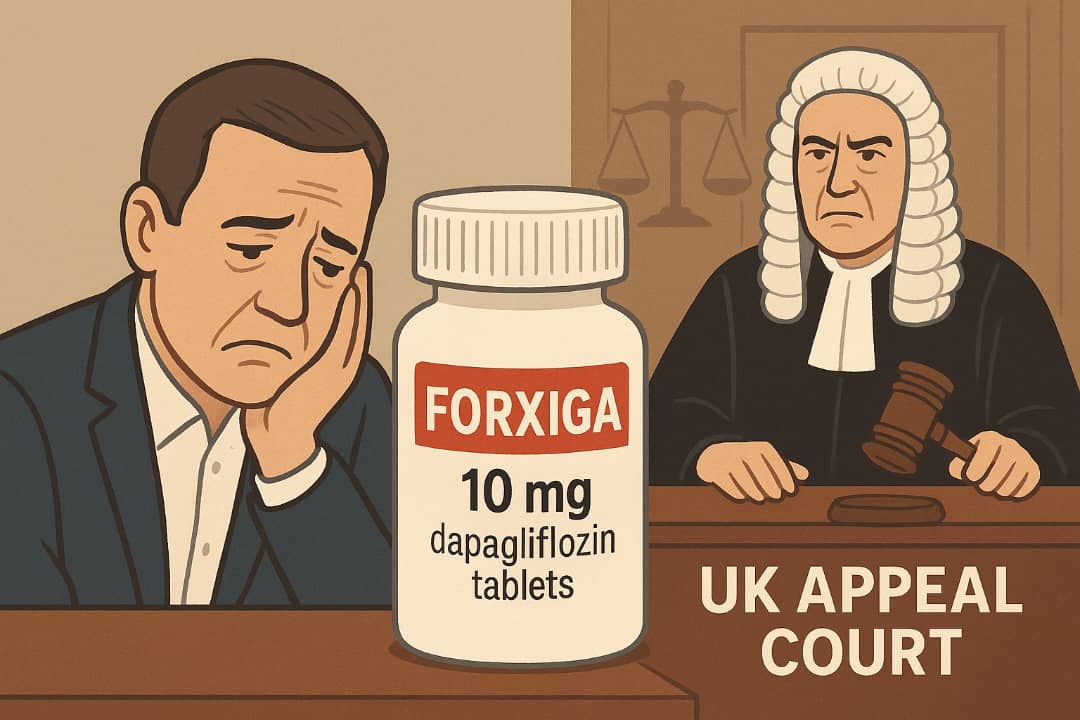
The Court applied the American Cyanamid guidelines: serious question, adequacy of damages for each side, and balance of convenience with status quo where factors are even. The judgment canvasses Neurim v Mylan on “adequate” damages not meaning “perfect” and the evaluative boundary and the Court of Appeal’s observations in Dapa II on pharma interim relief: generic entry often triggers a downward price spiral and Drug Tariff recategorisation; NHS resistance hampers restoring pre‑cut prices; and generics can “clear the path” by issuing timely revocation actions. But the judge stressed that these are not presumptions; each case turns on its evidence, especially here given unusual market volatility over a 14–15 month horizon to trial.
Understanding the Empagliflozin Jardiance Patent Dispute – Market context: from dapagliflozin to empagliflozin:
Three SGLT2 inhibitors dominate the UK:
- Jardiance (Empagliflozin),
- Forxiga (Dapagliflozin), and
- Invokana (Canagliflozin).
Empagliflozin’s market share peaked around 2020 but has since dipped to just under 30 %, while Dapagliflozin rose to about 65% by mid‑2025; overall SGLT2 volumes have grown significantly since NICE’s 2022 guidance. Critically, after the Supreme Court refused permission to appeal in the dapagliflozin SPC case on Jul 31, 2025, generics launched and NHS Drug Tariff recategorised dapagliflozin to Category M with rapid, exceptional price reductions from September–October 2025, with more reductions expected. IQVIA data showed a sharp fall in Forxiga’s share offset by generics, while Jardiance share remained essentially stable in early data.
Understanding the Empagliflozin Jardiance Patent Dispute – Role of SSHSC and NHS pricing evidence:
Given earlier judicial comments about NHS “resistance” to restoring originator prices post‑generic entry, the DHSC provided substantial evidence via Susan Grieve clarifying price and reimbursement mechanics, Drug Tariff categorisation, prescriber autonomy, and appropriate NHS influence on switching. The Court recorded that this evidence is valuable context for future interim injunction applications in pharmaceutical cases.
Understanding the Empagliflozin Jardiance Patent Dispute – Why an interim injunction now?
The judge emphasised unusual uncertainty: DRL decided to launch at a moment when the empagliflozin market is likely to change significantly and unpredictably even without generic entry, in part due to ongoing genericisation of dapagliflozin and pending NICE draft guidance (August 2025) proposing SGLT2s as first‑line alongside metformin, with final guidance expected February 2026. In such flux, assessing “adequacy of damages” for either party becomes especially difficult. Preserving the status quo minimises irremediable prejudice and improves the prospects of doing justice at trial, consistent with Olint’s “least irremediable prejudice” principle. The short‑term carve‑out sought by DRL (to market availability) risked immediate customer behaviour shifts; BI showed concrete risk, while DRL failed to show comparable short‑term prejudice if restrained from such communications.
Understanding the Empagliflozin Jardiance Patent Dispute – Key takeaways:
- Interim injunctions remain a real risk for generics planning at‑risk launches where SPCs and secondary patents persist, even after primary composition patents expire.
- “Skinny label” strategies do not immunise a launch from interim relief if related rights (SPC, crystalline or medical use patents) are asserted and trial is distant.
- NHS pricing dynamics and Drug Tariff categorisation play a central role in the adequacy‑of‑damages analysis; DHSC evidence may increasingly inform courts’ approaches.
- Market volatility triggered by a separate molecule’s genericisation and evolving NICE guidance—can tilt the balance towards preserving the status quo until a full trial.
Understanding the Empagliflozin Jardiance Patent Dispute – Conclusion:
EWHC 2834 (Pat) underscores the high evidential bar for at‑risk generic launches in complex, fast‑moving therapeutic markets. With empagliflozin still protected by an SPC until late 2029 and additional patents into the 2030s, and with a full revocation trial not listed until October 2026, the Court granted interim relief to avoid irreversible market disruption. Originators should prepare robust economic evidence; generics should “clear the path” early and anticipate that sudden market shifts elsewhere in a therapeutic class can weigh heavily at the interim stage.
💡 Got an idea/Feedback? Drop it in the form below!


























Leave a Comment